Research & Testing

Explore research and testing information from Granite Peak Labs. Our educational articles cover peptide research, laboratory testing methods, analytical techniques, and scientific documentation.

Learn more about the importance of independent laboratory analysis, Certificates of Analysis (COAs), and research material characterization.

All information is provided for educational and laboratory research purposes only. Products are not intended for human or veterinary use.

GLOW Research

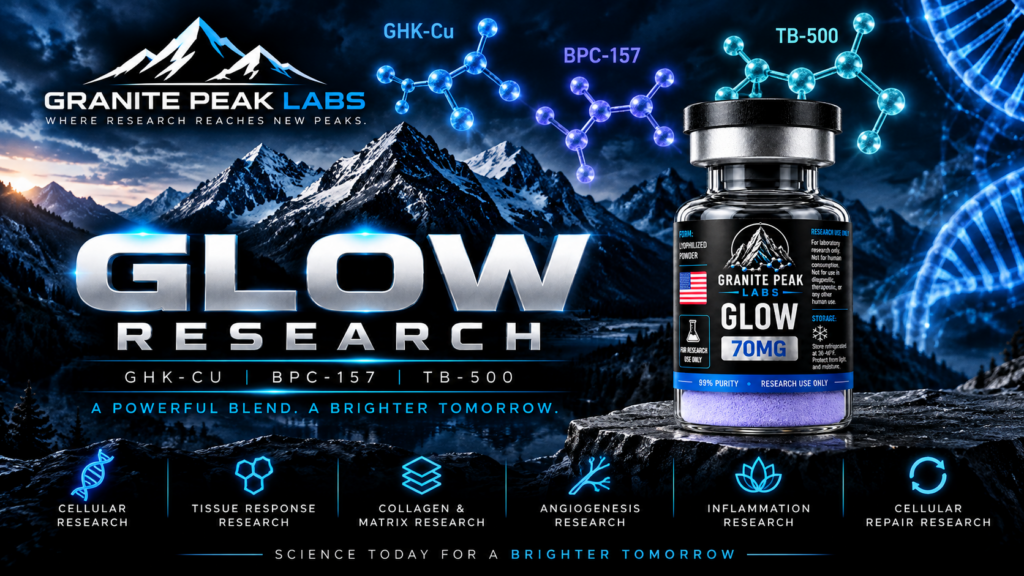
What Is GLOW? Understanding GLOW Peptide Research And Why Scientists Study It

If you have been reading about peptide research, you may have come across a blend commonly called GLOW. GLOW Research is becoming an interesting area of peptide study because GLOW combines three well-known research compounds: GHK-Cu, BPC-157, and TB-500. Each has been studied separately for different biological processes, while researchers are also interested in understanding

What Is GLOW? Understanding GLOW Peptide Research And Why Scientists Study It Read More »
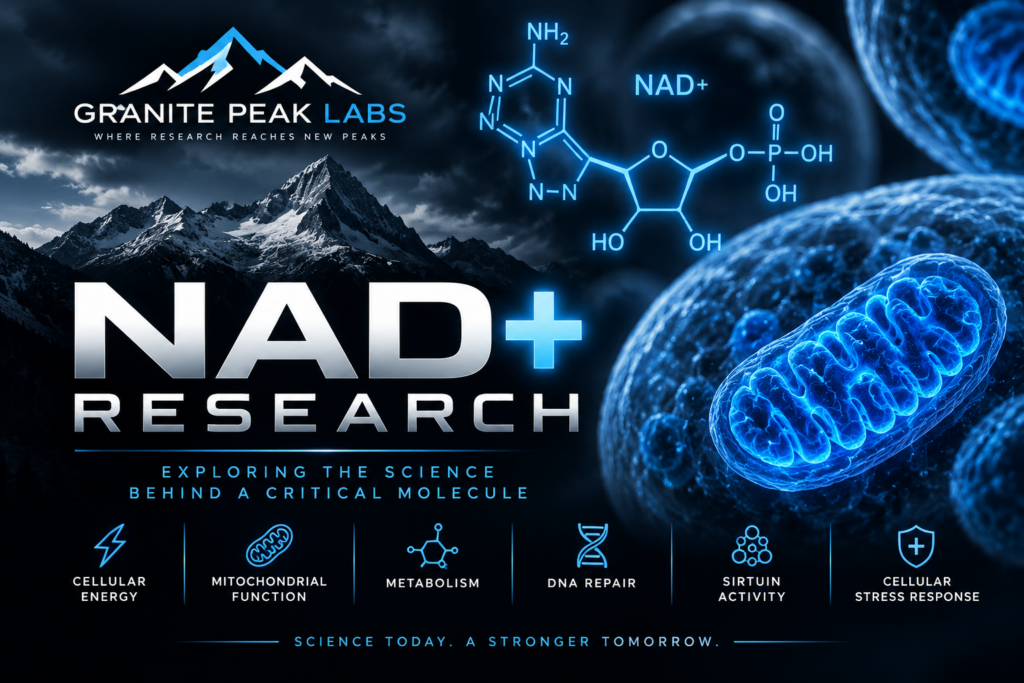
NAD+ research graphic showing mitochondria and cellular processes Title: NAD+ Research

What Is NAD+? Understanding NAD+ Research and Why Scientists Study It

NAD+ has become an increasingly popular subject in peptide and laboratory research, particularly in studies involving cellular energy, metabolism, mitochondria, DNA repair, and aging. But despite often being discussed alongside peptides, NAD+ is not actually a peptide. NAD+ stands for nicotinamide adenine dinucleotide, a molecule naturally found in virtually every living cell. It plays an

What Is NAD+? Understanding NAD+ Research and Why Scientists Study It Read More »
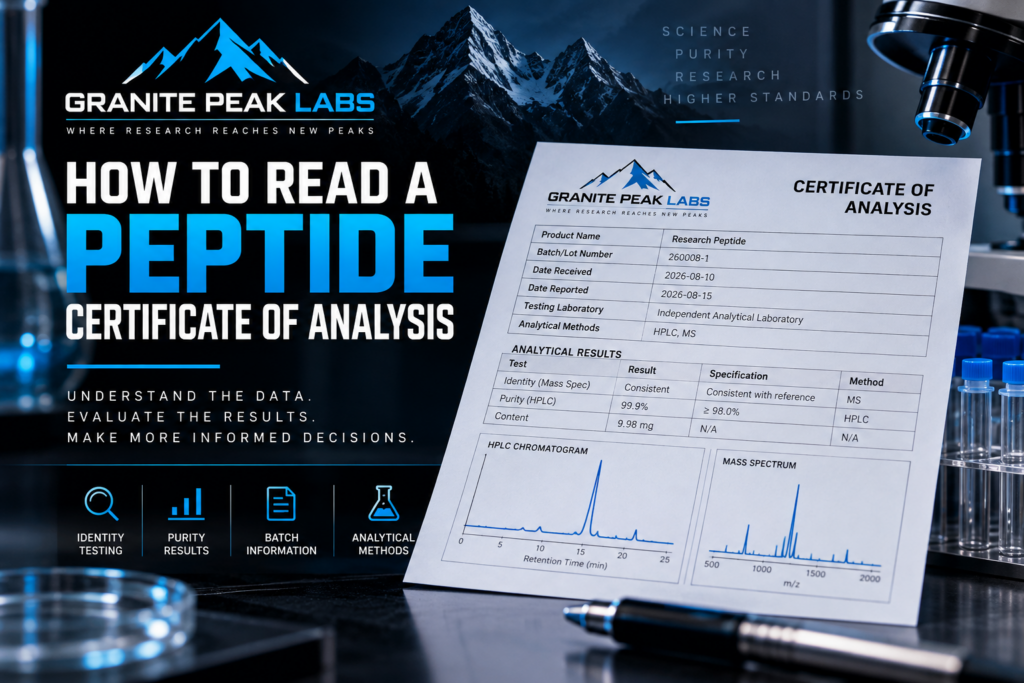
Peptide certificate of analysis

How to Read a Peptide Certificate of Analysis (COA)

A peptide certificate of analysis (COA) is an important document for researchers evaluating the identity, purity, and analytical characteristics of a research material. However, understanding the information presented on a COA can be difficult if you are unfamiliar with laboratory testing terminology. Knowing how to interpret batch information, identity testing, purity results, and analytical methods

How to Read a Peptide Certificate of Analysis (COA) Read More »