
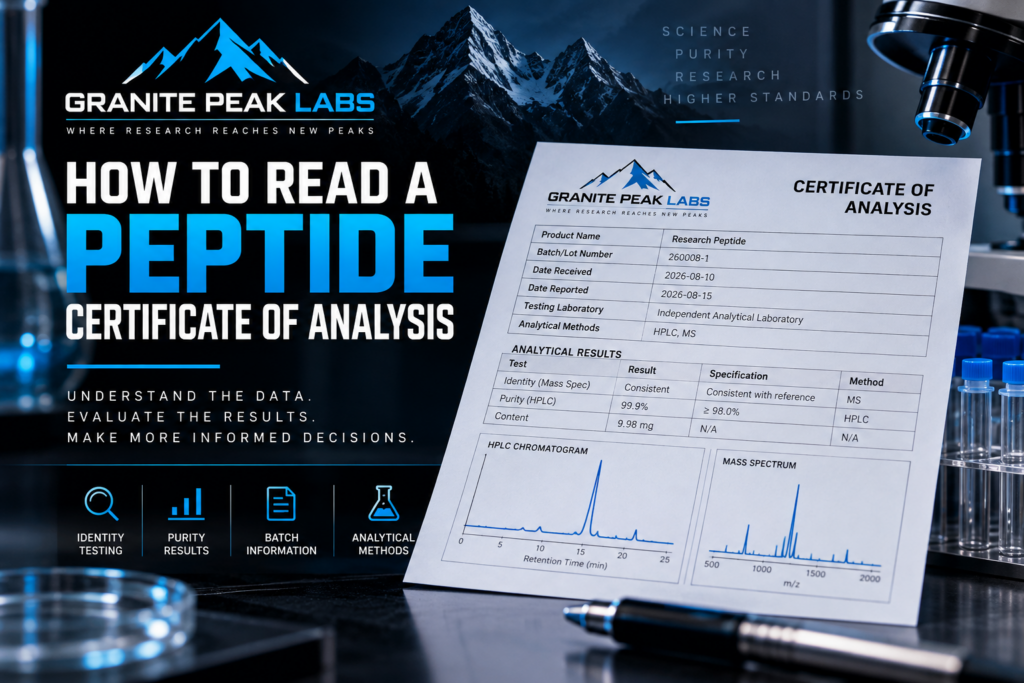
A peptide certificate of analysis (COA) is an important document for researchers evaluating the identity, purity, and analytical characteristics of a research material. However, understanding the information presented on a COA can be difficult if you are unfamiliar with laboratory testing terminology. Knowing how to interpret batch information, identity testing, purity results, and analytical methods can help researchers better evaluate the documentation associated with a research product.
What Is a Peptide Certificate of Analysis?
A Certificate of Analysis is a document that summarizes analytical testing performed on a specific material or batch. For research peptides, a COA may include information such as the product name, batch or lot number, testing dates, identity results, purity results, and the analytical methods used by the laboratory.
One of the most important features of a COA is its connection to a specific batch. Batch-specific documentation allows researchers to determine whether the analytical results correspond to the particular research material they are evaluating rather than relying on general testing information that may apply to a different batch.
The exact information included on a COA can vary depending on the laboratory and the testing performed. For that reason, researchers should consider the document as a whole rather than focusing on a single number or result.
What Information Should You Look for on a Peptide COA?
When reviewing a peptide certificate of analysis, researchers should examine several pieces of information rather than relying solely on the reported purity percentage. A well-documented COA should provide enough identifying information to connect the analytical results to a particular research material and batch.
Important information to review includes the product or compound name, batch or lot number, date the sample was received or tested, testing laboratory, analytical methods, identity results, and reported purity. Depending on the type of analysis performed, the COA may also include chromatograms, mass data, accession numbers, or other laboratory-specific information.
Comparing the batch number on the research material with the batch information shown on its COA is particularly important. This helps establish that the analytical documentation being reviewed corresponds to the specific batch in question.
When reviewing a peptide certificate of analysis, confirming these details can help establish whether the documentation is complete, traceable, and relevant to the specific batch being evaluated.
Understanding Identity Testing
Identity testing is used to determine whether a sample is consistent with the compound it is labeled to contain. In peptide analysis, laboratories may use techniques such as mass spectrometry to compare the measured molecular mass of a sample with the expected mass of the target compound.
Identity testing answers a different question than purity testing. A sample may show a high reported purity while still requiring separate identity confirmation to establish that the predominant material is actually the intended compound. For that reason, identity and purity results should be reviewed together rather than treated as interchangeable measurements.
When reviewing a COA, researchers should look for a clear identity result and, when available, supporting analytical data such as measured mass, expected mass, or a statement confirming that the sample is consistent with the specified compound.
Understanding Purity Results
Purity results describe the relative proportion of the analyzed sample attributed to the primary detected compound under the conditions of the test. High-performance liquid chromatography (HPLC) is commonly used for this type of analysis because it separates components in a sample and allows the laboratory to estimate their relative abundance.
A reported purity percentage should not be interpreted by itself. Researchers should also consider the analytical method, the chromatogram, the laboratory performing the test, and whether the result is tied to the correct batch or lot number. A percentage alone does not provide the same level of information as complete, batch-specific analytical documentation.
It is also important to distinguish purity from quantity or content. Purity describes the relative composition of the analyzed material, while content or mass testing addresses how much of the target material is present in the sample. These measurements answer different questions and should be interpreted separately.
Common Analytical Methods Used on Peptide COAs
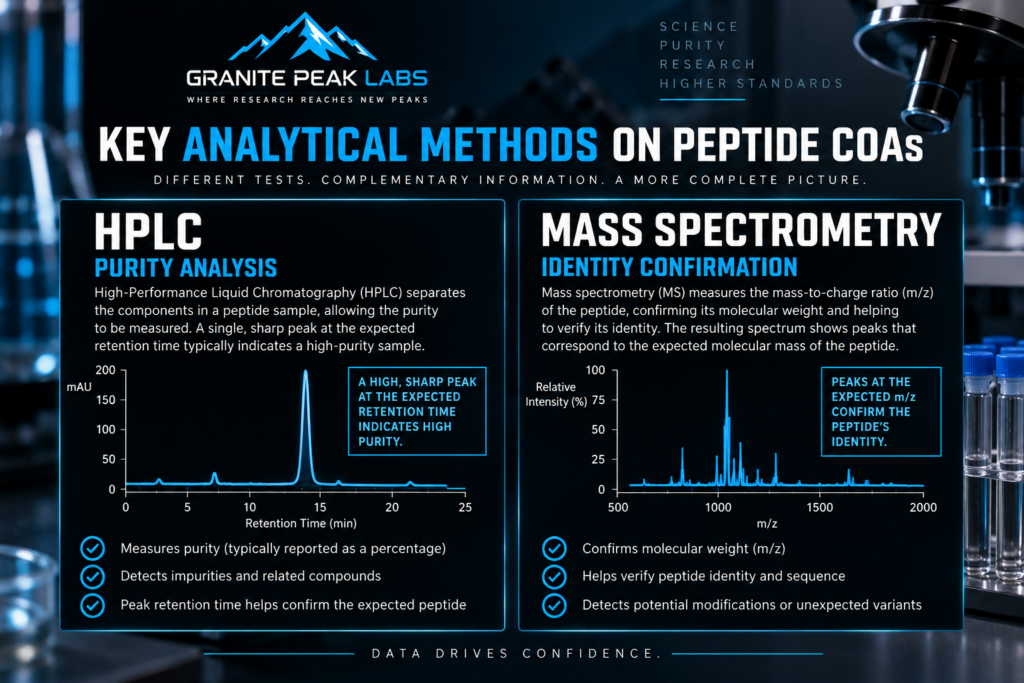
Peptide testing laboratories may use several analytical techniques depending on what they are attempting to measure. Two commonly encountered methods are high-performance liquid chromatography (HPLC) and mass spectrometry (MS). Each provides different information about a research sample.
High-Performance Liquid Chromatography (HPLC): HPLC separates components within a sample based on how they interact with the chromatography system. The resulting chromatogram displays peaks representing detected components. Laboratories can use these results to estimate the relative purity of the primary component compared with other detected components.
Mass Spectrometry (MS): Mass spectrometry measures mass-to-charge characteristics and can help determine whether the analyzed material is consistent with the expected molecular mass of the specified compound. This makes mass spectrometry useful for identity confirmation.
Because these methods answer different analytical questions, seeing both identity and purity testing can provide more useful information than relying on either result alone.
Why Batch and Lot Numbers Matter
A COA is most useful when its analytical results can be traced to a specific batch or lot. The batch or lot number shown on the research material should correspond with the identifying information provided on the associated testing documentation.
Batch-specific testing is important because analytical results from one production batch should not automatically be assumed to represent another. Manufacturing, handling, storage, and other variables can differ between batches. Maintaining a clear connection between a research material and its analytical documentation therefore improves traceability.
Researchers reviewing a COA should confirm that the product name and batch or lot number correspond with the material being evaluated before relying on the reported analytical results.
This traceability is one of the most important elements to consider when evaluating a peptide certificate of analysis.
How to Evaluate a Peptide Certificate of Analysis
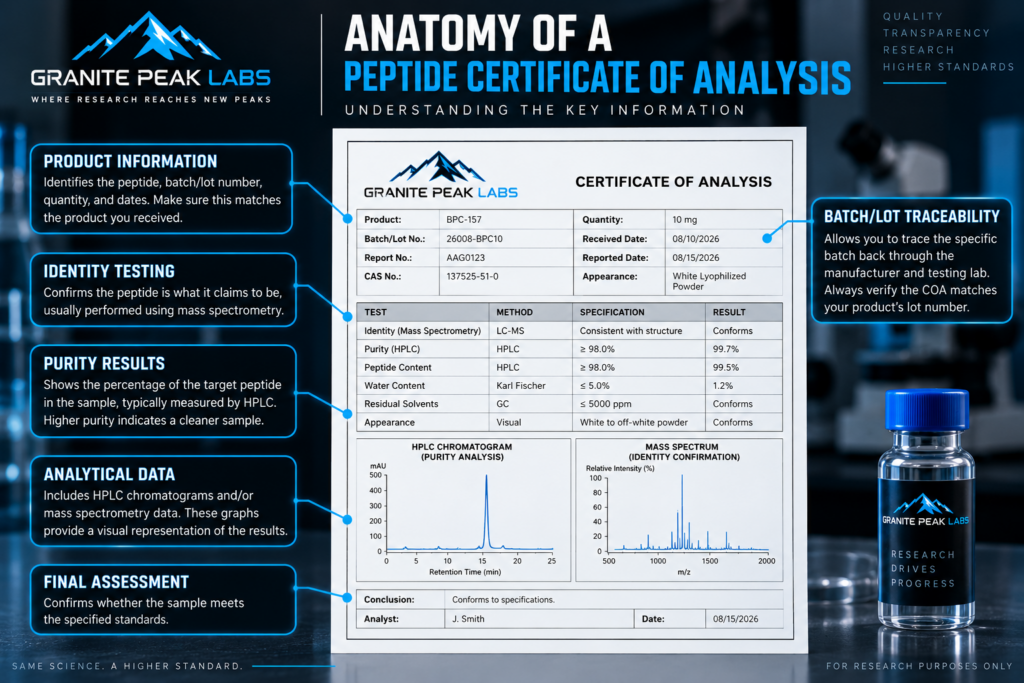
When reviewing a peptide certificate of analysis, researchers should consider the completeness and traceability of the documentation. A COA should provide enough information to identify the material tested, connect the results to a specific batch, and understand which analytical methods were performed.
Look for clearly identified product and batch information, the name of the testing laboratory, relevant testing or reporting dates, the analytical methods used, and the corresponding results. When supporting analytical data such as chromatograms or mass information are provided, these can offer additional context for interpreting the reported findings.
Researchers should also be cautious about relying on a purity percentage displayed by itself without supporting information. Analytical documentation is more informative when the reported result can be connected to a specific batch, testing method, and identifiable laboratory.
A well-documented peptide certificate of analysis therefore provides more than a single test result. It gives researchers a structured way to review analytical methods, batch traceability, identity information, and purity data together.
Viewing Granite Peak Labs Testing Documentation
Granite Peak Labs provides available batch-specific analytical documentation through our online COA database. Researchers can use this documentation to review available identity, purity, batch, and testing information associated with individual research materials.
Testing documentation is published as it becomes available, allowing researchers to review the analytical information associated with available batches. Visit the Granite Peak Labs COA page to view currently available Certificates of Analysis and testing documentation.
Frequently Asked Questions About Peptide COAs
What does COA stand for?
COA stands for Certificate of Analysis. It is a document that summarizes analytical testing and identifying information associated with a particular material or batch.
Is peptide purity the same as peptide identity?
No. Identity testing helps determine whether an analyzed sample is consistent with the specified compound, while purity testing evaluates the relative composition of the sample under the conditions of the analytical method. The two measurements provide different information.
What should I look for on a peptide COA?
Researchers should look for the product name, batch or lot number, testing laboratory, relevant dates, analytical methods, identity results, purity results, and any supporting analytical information provided by the laboratory.
Why should a COA include a batch or lot number?
A batch or lot number helps connect analytical results to the specific material that was tested. This provides traceability and helps distinguish testing performed on one batch from documentation associated with another.
Does a high purity percentage tell you everything about a research material?
No. A reported purity percentage is only one component of analytical documentation. Identity testing, batch traceability, the analytical method used, laboratory information, and supporting data should also be considered when reviewing a COA.
Final Thoughts
Understanding how to read a peptide certificate of analysis can help researchers make better-informed evaluations of analytical documentation. Rather than focusing on a single purity percentage, review the complete COA, including identity results, testing methods, batch information, laboratory information, and supporting analytical data.
Clear, batch-specific documentation improves traceability and provides researchers with a more complete picture of the analytical testing associated with a research material. Granite Peak Labs publishes available testing documentation through its COA database so researchers can review relevant analytical information directly.
Researchers interested in reviewing available materials can also explore the Granite Peak Labs research catalog for additional product information and associated documentation.
All Granite Peak Labs products are intended exclusively for laboratory research purposes and are not for human or animal consumption.